


Mental Health and Addiction
Do you or someone you love struggle with drug addiction? Did you know that many times addiction is a result of someone trying to self-medicate for mental health issues?
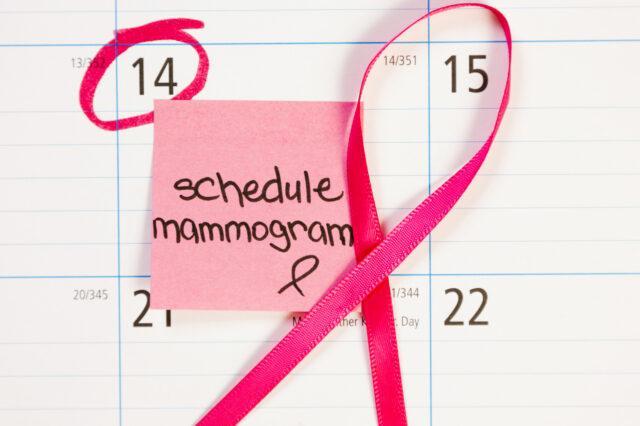
Breast cancer is one of the most common cancers in women, and finding it early—before it causes any symptoms—gives you the best chance of successful treatment. Screening means checking for cancer when you feel healthy and have no signs of a problem. The main screening test is a mammogram, a low-dose X-ray of the breast. This guide walks you through when to start, how often to go, and what to do if you are at higher-than-average risk.
What is a mammogram?
A mammogram is a quick X-ray that can find breast cancers that are too small to feel. Many
centers now use a newer version called 3D mammography (also called tomosynthesis), which
takes pictures from several angles. This technology finds slightly more cancers and leads to
fewer "false alarms" that require you to come back for extra pictures.
The whole appointment usually takes less than 30 minutes. Each breast is pressed briefly
between two plates so clear images can be taken. It can feel uncomfortable for a few seconds,
but the pressure is over quickly.
When should I start, and how often?
For women at average risk (no personal history of breast cancer, no known high-risk gene, and
no prior radiation to the chest), the leading expert groups agree that screening should be
available starting at age 40—but they differ slightly on exactly when to begin and how often to
go. It is usually recommended once every 1-2 years.
Why do the recommendations differ?
Screening saves lives by catching cancer early, but it is not perfect. Possible downsides include
"false positives" (an abnormal result that turns out not to be cancer after more tests), and
finding slow-growing cancers that might never have caused harm. Screening more often finds
more cancers earlier but also leads to more callbacks and extra tests. Different expert groups
weigh these trade-offs slightly differently, which is why their advice varies. This is a personal
decision worth discussing with your clinician.
What about stopping?
For women 75 and older, there is not enough evidence to say whether the benefits outweigh
the downsides for everyone. The decision to continue should be based on your overall health
and life expectancy—many groups suggest continuing as long as you are in good health and
would want treatment if cancer were found (Qaseem et al., American College of Physicians,
2026).
What if I have "dense breasts"?
Dense breast tissue is common and normal, but it does two things: it makes cancers harder to
see on a mammogram, and it slightly raises your own risk of breast cancer. If your mammogram
report says you have dense breasts, ask your clinician whether additional imaging (such as an
ultrasound or MRI) might be helpful for you. This is an individual decision based on your overall
risk (National Comprehensive Cancer Network, 2026).
Am I at higher-than-average risk?
Some women need to start earlier and have extra tests. You may be at higher risk if you have:
• A known inherited gene change that raises breast cancer risk (such as BRCA1 or BRCA2)
• A strong family history of breast or ovarian cancer, especially at a young age
• Radiation treatment to the chest between ages 10 and 30
• A personal history of breast cancer, or of certain high-risk breast biopsy findings
• A calculated lifetime risk of 20% or higher
Women at high risk are generally advised to have a yearly mammogram plus a yearly breast
MRI, often starting earlier than age 40). If you think any of these apply to you, ask your clinician
about a formal risk assessment—ideally by age 25—and whether you should see a genetic
counselor.
Know your own breasts
No matter your age or risk, it helps to be familiar with how your breasts normally look and feel.
Tell your clinician promptly about any new changes—such as a lump, skin dimpling, nipple
changes, or unusual discharge. Screening is for people without symptoms; a new symptom
should be checked right away, regardless of when your last mammogram was.
The takeaway
• Talk with your clinician about starting mammograms at age 40.
• Ask what schedule—yearly or every 2 years—makes the most sense for you.
• Let your clinician know about any family history or other risk factors so your plan can be
personalized.
• Report any new breast changes promptly, even between mammograms.
Early detection works. A short conversation with your clinician is the best first step toward a
screening plan that fits you.
This article is for general education and is not a substitute for personalized medical advice.
Please talk with your own clinician about what is right for you.


